Login
Login



- What is electrolysis testing and why is it important in hydrogen production?
- Are the different types of electrolyzers (Alkaline, PEM, and SOEC) tested differently?
- What is the difference between single cell/stack testing and full system testing for electrolyzers?
- What key parameters are measured during electrolyzer testing?
- What equipment and instruments are used for hydrogen electrolysis testing?
- What industry standards and certifications apply to electrolyzer testing?
- What are the common challenges identified during electrolyzer testing?
What is electrolysis testing and why is it important in hydrogen production?
Electrolysis is a key technology for producing green, climate-neutral hydrogen. Electrolysis testing means the systematic testing of stacks, cells and components through to complete systems under defined operating conditions. The aim is to reproducibly evaluate performance, efficiency, operating range, dynamics, safety and ageing.
This is crucial for successful market ramp-up because electrolyzers are increasingly operated flexibly with fluctuating renewable electricity while at the same time needing to achieve high availability and service life.
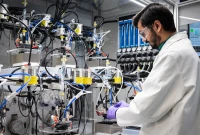
Validation can range from material testing and electrode and single-cell tests to short-stack and full-stack tests on a megawatt scale. Automated load profiles and 24/7 operation can enable realistic endurance and dynamic testing.
This allows weaknesses to be identified at an early stage, designs to be optimized and developments to be validated from the laboratory through to market readiness. Accelerated ageing tests play a particularly important role in this context, also helping to shorten development cycles and thereby accelerate market ramp-up. In addition, independent test results can create trust and therefore support the financing and realization of hydrogen projects.




Are the different types of electrolyzers (Alkaline, PEM, and SOEC) tested differently?
Yes. The fundamental performance parameters are comparable, but the test conditions differ depending on the technology.
Alkaline electrolysis (AEL) works with a liquid alkaline electrolyte and places particular requirements on electrolyte management and gas purity. PEM electrolysis (PEMEL) uses a proton-conducting membrane and is typically operated at higher current densities and with high dynamics.
AEM electrolysis (AEMEL) combines the use of membrane technology with alkaline conditions. SOEL, on the other hand, operates with steam at high temperatures and therefore requires different test benches and thermal test protocols.
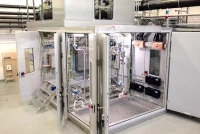
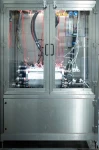
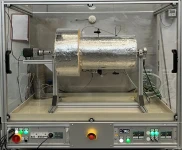
For low-temperature technologies such as AEL, AEMEL and PEMEL, components, cells and stacks can be tested under real operating conditions using test benches optimized for each technology.
What is the difference between single cell/stack testing and full system testing for electrolyzers?
Single-cell tests are primarily used to characterize materials and components such as electrodes, membranes or separators under precisely controlled and repeatable conditions. Electrochemical effects can be investigated specifically using methods such as polarization curves, EIS, CV or LSV.
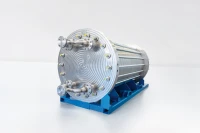
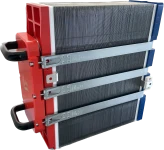
Stack tests transfer these questions to several cells on a technical scale and additionally reveal the effects of cell uniformity, contacting, media distribution, temperature control and scaling.
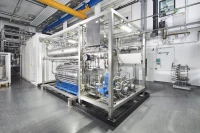
When testing complete systems, the entire electrolysis system, including the balance of plant, is considered, e.g. water treatment, pumps, gas separation, cooling, power electronics and control systems.
Stack and component testing can also help bridge the gap from single-cell testing to short-stack and full-stack testing on an industrially relevant scale.
What key parameters are measured during electrolyzer testing?
Stack testing primarily focuses on evaluating efficiency, gas quality and degradation behavior. Key measured variables include cell and stack voltage, current density, temperature, pressure, flow rate and the amount of hydrogen produced.
From these measurements, parameters such as polarization curves, efficiency and specific energy consumption are derived. Gas quality and gas crossover are also examined, as both affect efficiency and safety.
At laboratory scale, electrochemical diagnostic methods such as EIS, CV and LSV are also used to investigate, for example, ohmic, kinetic or mass transport losses.
Long-term and dynamic tests also examine degradation rates, start-stop behavior and responses to changing load profiles. Depending on the available testing infrastructure, these measurements can be performed from single cells through to large-scale stacks under different pressure levels and operating currents.

What equipment and instruments are used for hydrogen electrolysis testing?
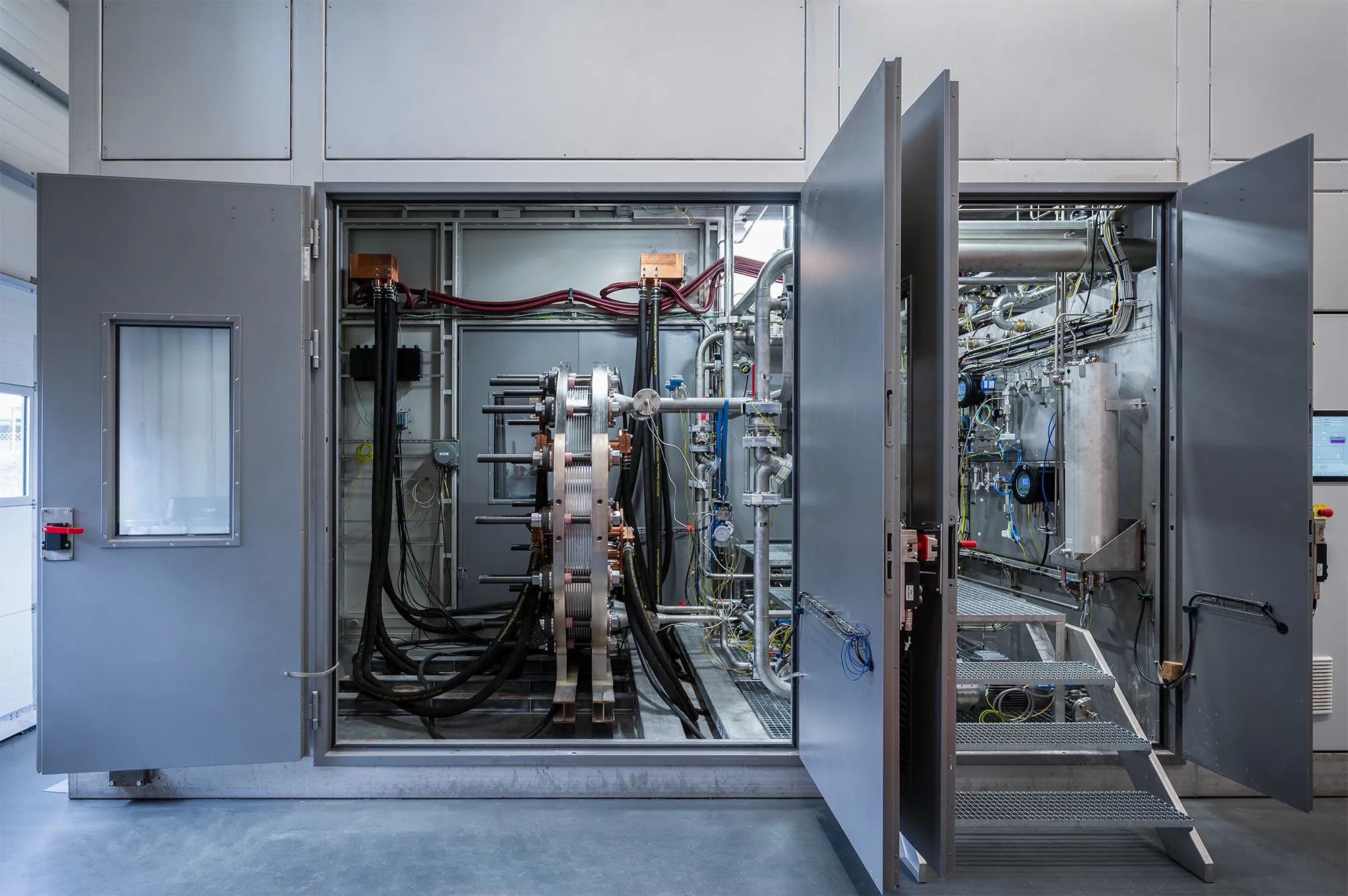
First of all, very specific and complex infrastructure is required, such as powerful electrical connections, special building gas warning systems and facilities for handling or utilizing the hydrogen produced.
An electrolysis test bench then combines electrical power supply, media supply, measurement and safety technology as well as automated data acquisition and evaluation.
High-performance rectifiers, voltage and current measurement equipment, temperature, pressure and flow sensors, as well as systems for water or electrolyte supply, cooling and gas handling are required. Gas analysis is used, among other things, to determine purity and crossover.
Potentiostats and impedance spectroscopy are used for detailed electrochemical investigations; accompanying material analysis such as SEM and EDX is also helpful.
Depending on the testing facility, multiple test benches and accompanying material analysis methods may be available. Modern testing environments can also enable customers and development teams to monitor measurement data online in real time.
What industry standards and certifications apply to electrolyzer testing?
International standards and harmonized test procedures are particularly relevant for electrolyzers. EU-harmonized JRC test protocols exist for the comparable evaluation of performance and ageing, e.g. for polarization curves, EIS, energy performance as well as accelerated stress and degradation tests.
Which standards and certifications are specifically applicable depends on the technology, system boundary, pressure level and intended location of use.
For development purposes, in addition to formal compliance with standards, a reproducible and documented test methodology is therefore important, clearly defining operating conditions and measurement uncertainties.
What are the common challenges identified during electrolyzer testing?
Common challenges often only become apparent under realistic operating conditions: uneven current density, temperature or media distribution within the stack, increasing cell voltages due to degradation, gas crossover, leaks, contact and sealing problems, or limitations during partial-load operation and rapid load changes.
There are also interactions between components that are not yet visible in single-cell testing. In dynamic operation with renewable electricity, start-stop cycles, rapid load changes and long operating periods are particularly relevant.
A major challenge is transferring laboratory results to larger stacks. Testing at different scaling levels, combined with electrochemical diagnostics and material analyses, can therefore help identify the causes of anomalies and support the optimization of electrolyzer designs.
Content contributed by Zentrum für Sonnenenergie- und Wasserstoff-Forschung Baden-Württemberg (ZSW)
As one of the leading independent hydrogen research institutes in Europe, ZSW’s mission is application-oriented R&D and technology transfer to industry to support the market ramp-up of new energy technologies. With decades of expertise in electrolysis, including AWE, AEM and PEM, as well as PEM fuel cell development, testing and manufacturing, we offer testing and consulting services, cooperative R&D and our own technologies/IP for product development. ZSW: 38 years of research, development and technology transfer.

 Compare
 Add to list