
 Login
Login



- What are the main problems companies face today when it comes to storing and using renewable energy?
- How does hydrogen complement renewable energies compared to direct feed-in to the power grid?
- How can hydrogen be used as electricity, heat, or process gas at a company's site?
- How does the use of waste heat improve overall efficiency and cost savings?
- What role does intelligent system control play?
- How does a self-learning system work and what data is used?
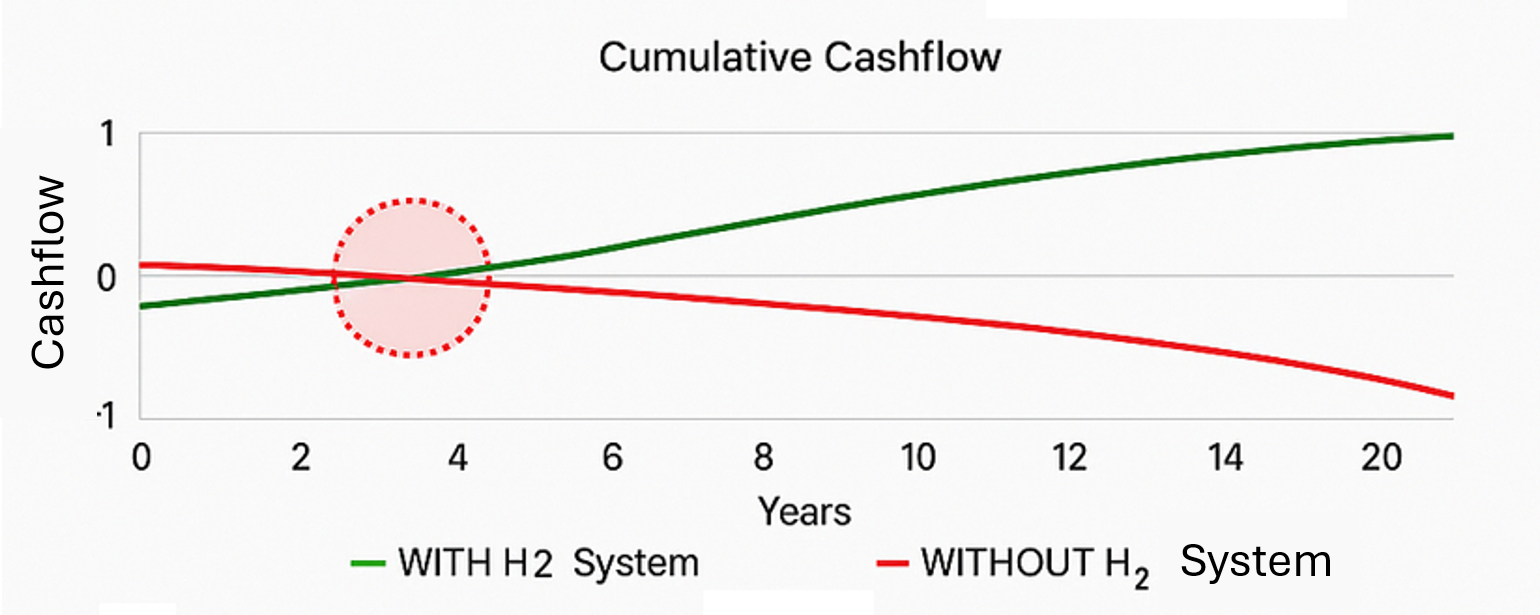
- What are the economic advantages of producing hydrogen in-house?
- How does the use of hydrogen on site support grid stability?
- How will hydrogen influence the future of energy autonomy for companies and the competitiveness of industrial locations?
What are the main problems companies face today when it comes to storing and using renewable energy?
Many companies currently face the challenge of making their energy supply both future-oriented and economically reliable. Renewable energies such as wind and solar power are cost-effective, but their availability fluctuates strongly. Because suitable storage solutions are often lacking, surplus energy cannot always be used effectively. In addition, changing political conditions and complex regulatory requirements create uncertainty, delaying investment decisions or preventing them altogether.
For these reasons, organizations increasingly require holistic support that helps them overcome technical, economic, and regulatory hurdles while transitioning to sustainable energy systems.
How does hydrogen complement renewable energies compared to direct feed-in to the power grid?
Hydrogen enables the long-term storage of large quantities of renewable energy and makes it available when needed. Beyond serving as an efficient energy store, it can also replace fossil fuels such as natural gas in various industrial processes. This greatly increases flexibility and helps stabilize supply, especially during periods of low solar or wind generation. Since surplus renewable electricity is often not remunerated adequately, converting it into hydrogen allows companies to utilize energy that would otherwise be lost. This contributes to a more stable, climate-neutral, and economically efficient energy system.
How can hydrogen be used as electricity, heat, or process gas at a company's site?
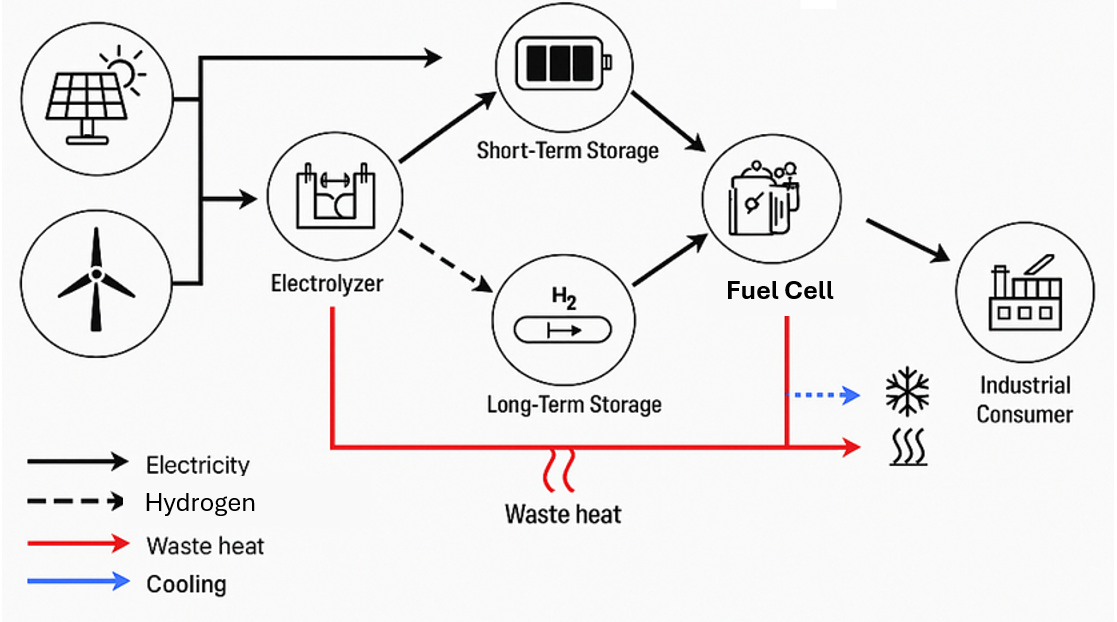
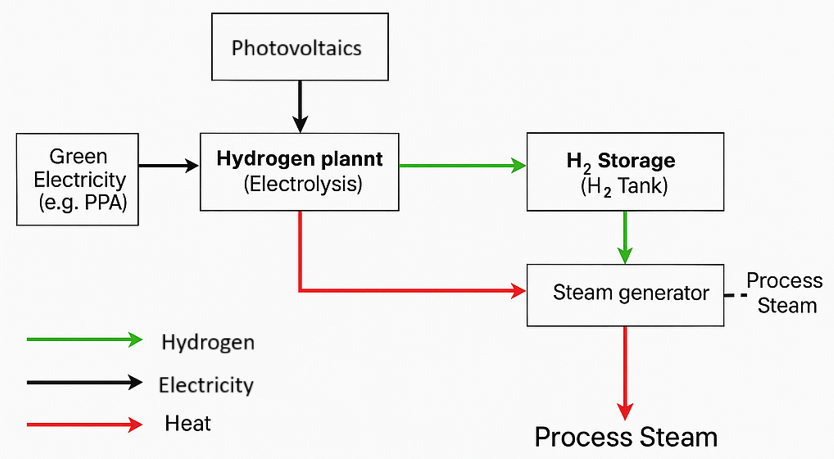
Hydrogen can serve both as an energy carrier and as a material input. In existing industrial processes, it can replace natural gas, such as in steam generation—typically requiring only manageable modifications. Hydrogen can also be produced on-site from surplus solar or wind power and stored for later use. When required, it can be converted back into electricity and heat through fuel cell systems. This ensures continuous supply even when renewable generation is temporarily unavailable and supports a more resilient energy infrastructure.
Use as energy storage
Use as substitute of natural gas
How does the use of waste heat improve overall efficiency and cost savings?
All energy conversion generates waste heat, and in many facilities this valuable heat is left unused. When it is captured and repurposed, for example, for space heating or industrial processes, overall system efficiency increases significantly. This not only reduces operating costs but also improves the ecological performance and long-term sustainability of the entire plant.
What role does intelligent system control play?
Intelligent and technology-neutral control systems are crucial for unlocking the full potential of hydrogen-based energy solutions. They enable seamless integration of diverse components and allow real-time adjustments to operating conditions. By continuously optimizing system behavior, companies can achieve higher efficiency, adapt to market conditions more effectively, and operate their energy systems in a more economically optimized manner.
How does a self-learning system work and what data is used?
Artificial intelligence and machine learning allow energy systems to operate in a self-learning manner. By analyzing weather forecasts, consumption patterns, market prices, and other relevant data points, a digital twin of the system can be created. This digital model helps identify the most efficient operating modes and continuously refines system performance. As a result, energy is used more efficiently and overall profitability improves.
What are the economic advantages of producing hydrogen in-house?
Operating an in-house hydrogen plant reduces dependence on volatile energy prices and external suppliers. It lowers CO₂ emissions, increases access to subsidies, and may improve financing conditions as sustainable technologies become more widely supported. At the same time, companies can secure production capacity, avoid peak-load penalties, and strengthen their market position by demonstrating environmental responsibility and technological leadership

How does the use of hydrogen on site support grid stability?
Local hydrogen production helps stabilize the electrical grid by converting excess renewable energy into hydrogen, which can later be reconverted into heat or electricity during periods of high demand. This helps balance peak loads, avoids grid overloads, and reduces the need for costly grid interventions or expansion projects. Additionally, the flexibility provided by hydrogen enables companies to generate additional revenue or tailor their energy strategies to market signals.
How will hydrogen influence the future of energy autonomy for companies and the competitiveness of industrial locations?
Hydrogen technologies offer companies the opportunity to operate more independently and climate-neutrally. By reducing exposure to fluctuating energy markets and relieving the burden on public infrastructure, organizations strengthen their resilience. Hydrogen also enables new business models and opens additional economic potential within the evolving energy landscape. Companies that adopt these solutions early can secure a competitive advantage and contribute significantly to global decarbonization efforts.
Content Contributed by schrand.energy GmbH & Co. KG,
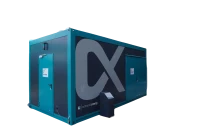
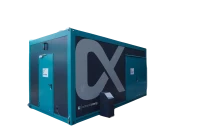
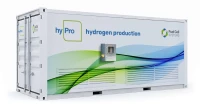
schrand.energy GmbH & Co. KG, based in Essen (Oldenburg), emerged in 2022 as an independent entity from the long-established family business SCHRAND, which has been active in international pipeline construction for decades. Building on this solid expertise, schrand.energy successfully develops future-oriented solutions in the field of green hydrogen technologies. The focus is on the innovative pilot plant at the company's site for decentralised energy supply: in a modular container solution, surplus electricity from photovoltaics is converted into hydrogen, stored and converted back into electricity when needed – including efficient use of the waste heat generated. The result is a completely self-sufficient energy cycle in island operation, controlled by the company's own intelligent energy management system – sustainable, flexible and practical. The areas of application range from industry and commerce to agriculture and housing – wherever an independent, sustainable energy supply is required.
 Compare
 Add to list
 Compare
Add to list
Compare
Add to list

 Compare
Add to list
Compare
Add to list