
 Login
Login



- What is PEM electrolysis and how is a PEM electrolyzer structured?
- How are bipolar plates designed and manufactured for PEM electrolysis?
- How does the design of PEM electrolyzer cells differ from fuel cells, and what challenges arise?
- What role do sealing systems and materials play in PEM electrolysis?
- What materials are used for bipolar plates and how is material development evolving?
- What materials are used for bipolar plates and how is material development evolving?
- How does manufacturing expertise influence performance and system integration?
What is PEM electrolysis and how is a PEM electrolyzer structured?
PEM (polymer electrolyte membrane) electrolysis is a process in which water is split into hydrogen and oxygen using electrical energy, with a polymer electrolyte membrane (PEM) separating the two electrodes (anode and cathode).
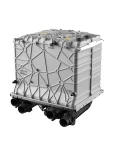
The core of PEM electrolysis is the stack, which consists of several PEM electrolysis cells, each of which, in turn, consists of a membrane electrode assembly (MEA) and two surrounding bipolar plates (BPP). As in PEM fuel cells, bipolar plates are the functionally decisive component in PEM electrolyzers. They distribute and collect the reaction media, conduct electrical currents, and effectively seal the media channels as well as the actual cell from each other and from the outside. In addition, together with the cell seal, they perform the important task of safely sealing the hydrogen, some of which is produced at pressures of more than 30 bar.
Bipolar plates are therefore subject to extreme requirements: they must be corrosion-resistant, electrically conductive, and mechanically stable in order to withstand the demanding conditions of electrolysis, since high temperatures, high pressures, and high cell voltages create a very corrosive environment. At the same time, the production of bipolar plates is a decisive cost factor in PEM electrolysis.




How are bipolar plates designed and manufactured for PEM electrolysis?
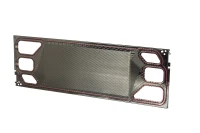
The development and manufacturing of bipolar plates build on extensive experience from PEM fuel cell technologies. Metallic bipolar plates are widely used due to their advantages in cost efficiency, power density, and suitability for demanding operating conditions. They are typically produced using precision forming processes such as stamping, combined with highly automated and integrated production lines. Advanced tooling concepts, such as progressive die tools, enable minimal cycle times and scalable production aligned with automotive standards.
Manufacturers such as EKPO Fuel Cell Technologies, apply these approaches in fully integrated production environments, combining metal forming, coating, and sealing technologies within in-house manufacturing processes.
Key functional elements of bipolar plates include the sealing system and the integrated flow field. The flow field consists of embossed channel structures that enable uniform water distribution and efficient removal of hydrogen and oxygen. To ensure durability and performance, metallic plates are coated to protect against corrosion while maintaining electrical conductivity.

How does the design of PEM electrolyzer cells differ from fuel cells, and what challenges arise?
Unlike in a fuel cell stack, the cells of an electrolyzer are generally not built from two media-tight welded half-plates. Instead, in addition to a bipolar plate with channel structures, they include further layers that handle gas discharge and pressure distribution within the cell. Since there is pressure in the range of 30 bar and above on the hydrogen side, the membrane must be supported by so-called pressure transport layers (PTL). Together with gas distribution structures made of meshes, expanded metals, or porous sintered structures, this results in a complex multilayer design that presents several challenges in terms of coordination, design, and cost-effective manufacturing.
To address these challenges, design approaches focus on functional integration and flexible manufacturing. For example, manufacturers such as EKPO Fuel Cell Technologies develop concepts that combine structural support, sealing, and flow management into fewer components, which can reduce system complexity and simplify assembly.
What role do sealing systems and materials play in PEM electrolysis?
Sealing is critical for separating media, stabilizing the cell mechanically, and preventing leakage of reaction products. Sealing materials are typically based on specially developed elastomers that are adapted to the operating conditions of PEM electrolysis. In some cases, these materials are developed and optimized in-house, as practiced by companies such as ElringKlinger and EKPO.
Through the integral design of bipolar plates with structural elements such as support frames or pressure transport layers, sealing concepts can be further enhanced. The use of bead-based sealing technologies, known from fuel cell applications, enables high-pressure-stable sealing and can simplify water and gas distribution within the cell. The precise design of sealing systems, supported by material expertise and manufacturing know-how, has a direct impact on operational safety and service life.
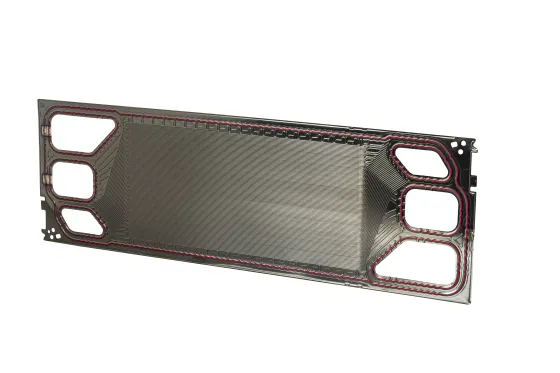
Example: Bipolar plate from EKPO
What materials are used for bipolar plates and how is material development evolving?
Currently, titanium is widely used for bipolar plates due to its corrosion resistance. However, there is ongoing development toward more cost-effective materials such as stainless steel combined with suitable coatings.
Surface coatings play a crucial role in protecting against corrosion while ensuring high electrical conductivity. Manufacturers with expertise in materials and coating technologies, such as EKPO Fuel Cell Technologies, are working on enabling these material transitions for future applications.
What materials are used for bipolar plates and how is material development evolving?
Compared to other electrolysis technologies, PEM electrolysis is characterized by a smaller footprint, higher dynamics during load changes, and high hydrogen outlet pressure.
Due to its high-power density, flexibility, and scalability, PEM electrolysis is particularly suitable for systems with fluctuating electricity availability. It is therefore well suited for integration with renewable energy sources such as wind and solar.
The possible applications of PEM electrolysis are diverse. The technology is used, for example, for:
- The decarbonization of various industries: Hydrogen from PEM electrolysis is used in many ways, for example in the chemical industry, metal processing, glass production, and food production.
- E-mobility: PEM electrolysis supplies green hydrogen for fuel cell vehicles and enables emission-free mobility with long ranges and short refuelling times, including applications in trucks or ships.
- Energy storage: PEM electrolyzers can also be used for decentralized hydrogen production. PEM electrolysis converts surplus electricity from renewable sources into hydrogen, which can then be stored and reconverted into electricity when needed or used directly.

How does manufacturing expertise influence performance and system integration?
Manufacturing expertise plays a key role in enabling high-performance PEM electrolyzer systems. This includes capabilities in forming, stamping, welding, coating, and elastomer processing. Some manufacturers, such as EKPO Fuel Cell Technologies, combine these capabilities within integrated production environments and apply automotive standards to ensure quality and scalability.
In addition, a deep understanding of electrochemical cell design allows for the functional integration of multiple components into fewer parts. This can reduce complexity, simplify stack manufacturing, improve quality, and minimize assembly-related errors. Such approaches contribute to improving both the technical performance and the economic efficiency of PEM electrolyzer systems.
Content contribued by EKPO Fuel Cell Technologies GmbH
EKPO Fuel Cell Technologies (EKPO) is a leading joint venture in the field of development and large-scale production of fuel cell stacks for CO2-neutral mobility. We are a full-service supplier for fuel cell stacks and components used in trucks, buses, light commercial vehicles, but also SUVs and larger passenger cars and for rail and marine applications. We build on the industrialization expertise of two established international automotive suppliers – ElringKlinger and OPmobility. Our goal is clearly defined: the development and large-scale production of high-performance fuel cell stacks aimed at driving forward CO2-neutral mobility – whether on the road, rail, water or off-highway.


 Compare
 Add to list