Login
Login



China’s hydrogen market is developing at a pace and scale that can be difficult to understand from Europe.
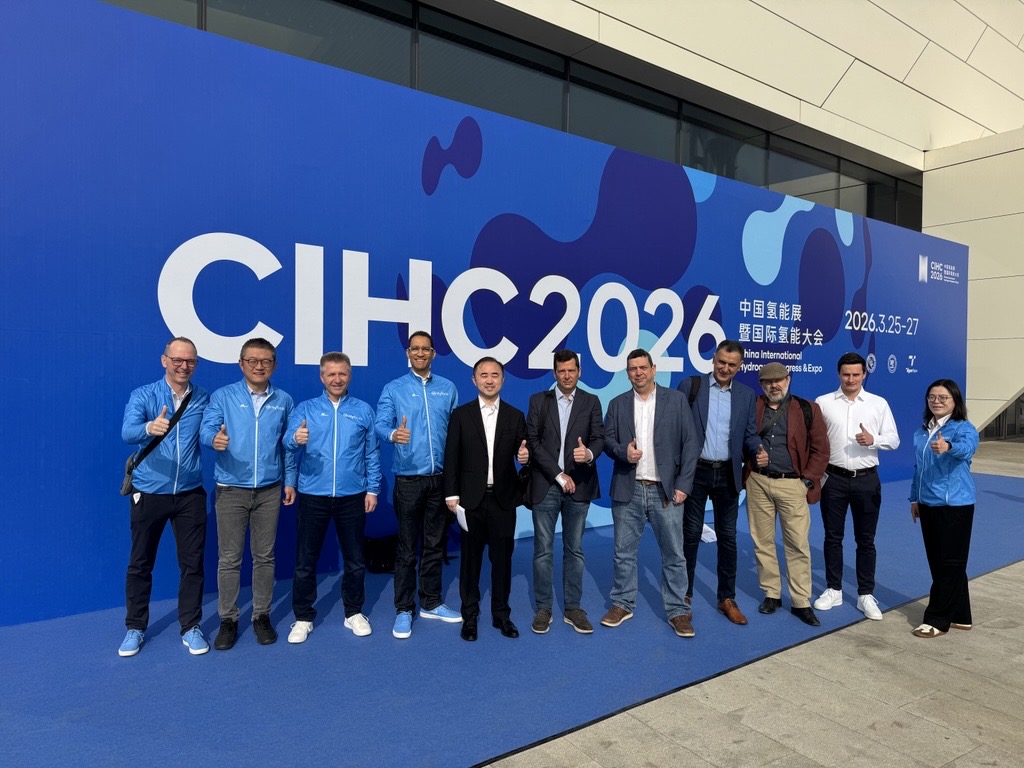
In March 2026, Hyfindr led an international delegation through one of the world’s most dynamic hydrogen markets. Participants from Croatia, Spain, Switzerland, France and Germany visited hydrogen clusters, manufacturers, testing centres, trade fairs and integrated energy projects across eight Chinese cities.
The aim was to gain first-hand market insight, build relationships and explore opportunities for international cooperation. What we encountered was an industry focused firmly on testing, manufacturing and scaling.
Daxing: A Hydrogen Ecosystem in Motion
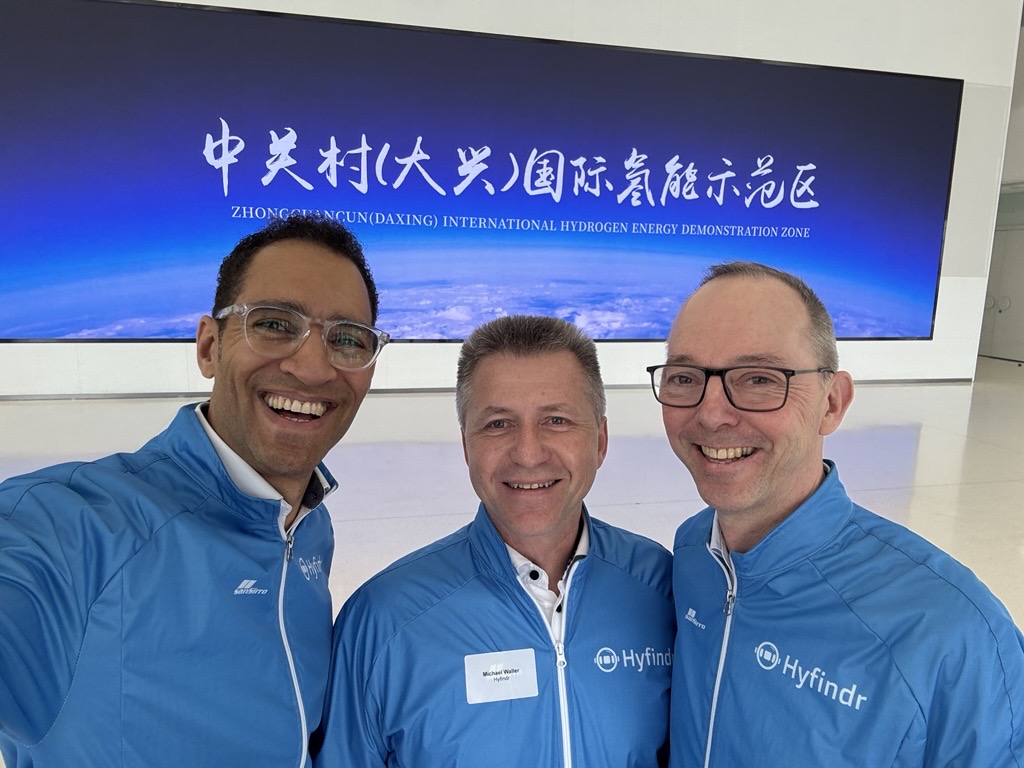
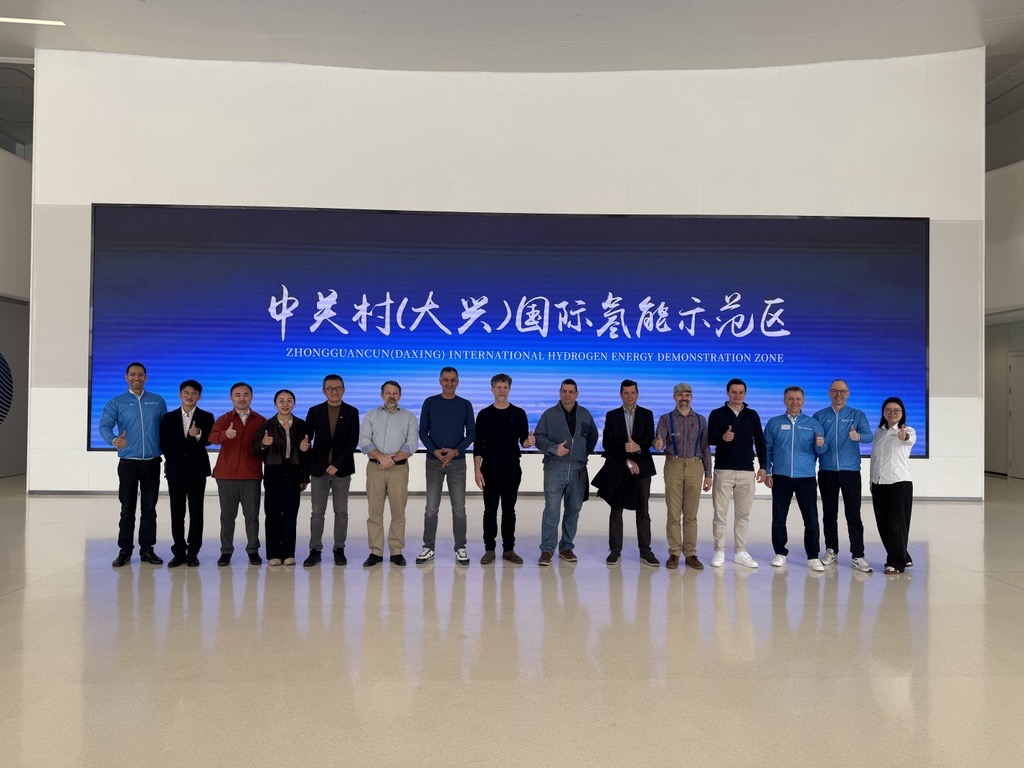
The journey began at the Daxing International Hydrogen Energy Demonstration Zone near Beijing.
Established in 2020, Daxing has already developed into one of China’s most important hydrogen clusters. More than 200 companies cover almost the entire value chain, from research and component development to system production and practical applications.
What stood out was the maturity of the ecosystem. Production halls, laboratories and development centres are already in use. Technologies are not simply being discussed as future possibilities; they are being tested, manufactured and prepared for deployment.
The local hydrogen refuelling station reflects this scale. With a capacity of approximately five tonnes per day, it supplies buses and commercial vehicles operating in and around the industrial park. Hydrogen-powered vehicles are therefore a visible part of everyday activity.
Rapid Progress from Concept to Application
Several company visits demonstrated how quickly technologies can move towards commercial use.
Hydrogen truck manufacturer Hybot is working with a 300 kW fuel cell system and plans to expand its production capacity significantly. Its stated objective is to manufacture up to 100 heavy-duty trucks per month.
Nearby, Nowogen is developing fuel cell stacks and complete systems. The delegation saw a 1 MW fuel cell stack on a test bench, designed as part of a modular system for maritime applications. It is intended to power inland vessels on waterways including the Beijing–Hangzhou Canal and the Yangtze River.
Projects that had been presented as concepts only a year earlier were already entering the testing phase. These short development cycles were a recurring feature of the trip.
Integration Accelerates Industrialisation
In Baoding, the delegation visited Great Wall Motors and its subsidiary FTXT Energy Technology.
The group brings together fuel cell stacks, complete systems, power electronics and hydrogen storage. Development, manufacturing, integration and vehicle applications are closely connected.
This approach can considerably shorten development times. Components are not created in isolation but tested and improved alongside the systems and vehicles in which they will ultimately operate.
The neighbouring TestHy facilities highlighted another important part of industrialisation: independent testing and validation. Its laboratories cover more than 20,000 square metres and can perform over 300 testing procedures, according to the company.
For international businesses, facilities such as TestHy can also provide support in understanding Chinese standards and market requirements.
A Trade Fair Reflecting Industrial Scale
Back in Beijing, the delegation attended the China International Hydrogen Congress & Expo and the Beijing International Hydrogen Technology & Equipment Exhibition.
With around 20,000 visitors, 500 exhibitors and 1,000 products on display, the events demonstrated the breadth of China’s hydrogen supplier landscape.
Megawatt-scale electrolysers were a common sight, reflecting a market in which projects ranging from 100 to 600 MW are already being built or operated. Several manufacturers also presented new fuel cell stack generations with outputs of up to 300 kW for commercial vehicles.
The impression was not of a small number of isolated market leaders, but of intense competition between many companies developing similar technologies. This creates continuous pressure to improve performance, reduce costs and accelerate development.
Rudong: An Integrated Energy System in Practice
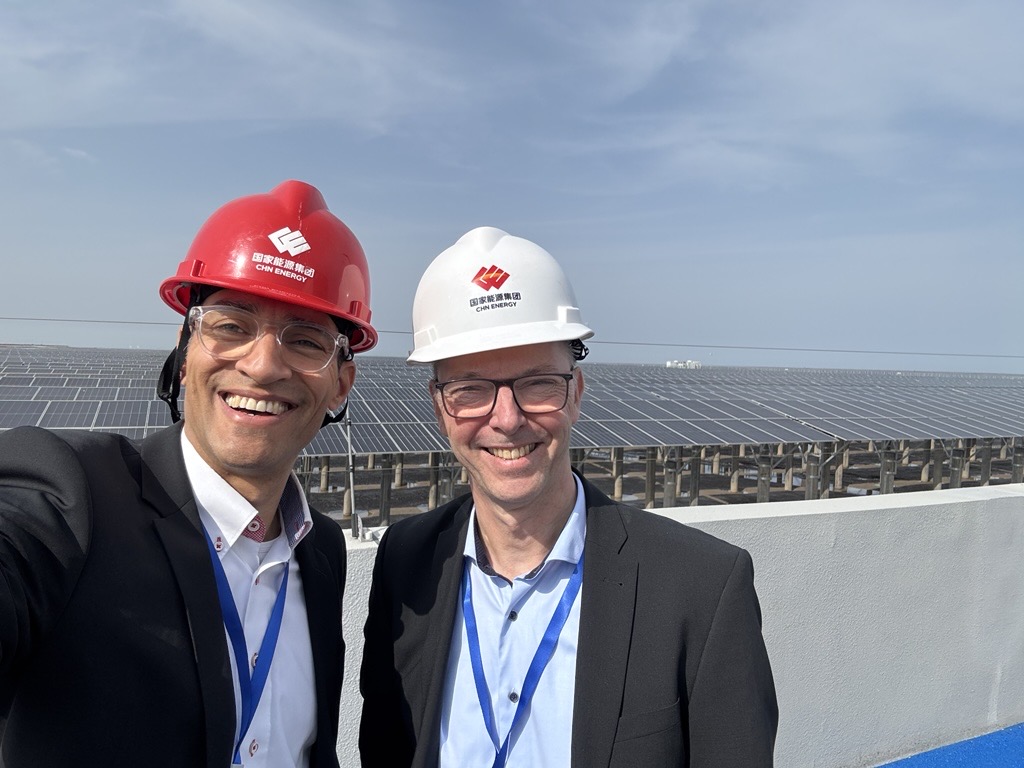
Further south, the delegation visited a large-scale renewable energy project in Rudong.
The site combines 400 MW of photovoltaic capacity with grid access, battery storage, hydrogen production and a hydrogen refuelling station. Its electrolysis plant produces up to 1,500 Nm³ of green hydrogen per hour, while the refuelling station can dispense up to 500 kilograms per day.
The project demonstrates how renewable electricity, storage, electrolysis and hydrogen applications can operate as parts of one integrated energy system.
Yet even a project of this scale represents only a small part of China’s wider energy transition.
Why Seeing the Market Matters
In total, delegates visited eight cities, including Shanghai and its Jiading Hydrogen Park where we filmed a short video highlighting MSA Safety’s manufacturing facilities (see video link here )
Across the trip, the delegation experienced considerable openness and interest in international cooperation. Formal meetings provided technical and commercial insight, while conversations over shared meals helped build the personal trust that remains an important part of doing business in China.
Market reports and online meetings can provide useful information, but they cannot fully communicate the speed at which China’s hydrogen industry is being developed, built and scaled.
You have to see it first-hand to truly understand it.
Hyfindr therefore plans to organise another delegation trip to China with its Chinese partner in March 2027, giving hydrogen professionals the opportunity to explore the market, meet potential partners and experience its development directly.
Interested in joining the next Hyfindr hydrogen delegation to China? Register your interest early to receive information on our plan for March 2027.
2027 Hydrogen Business Development Tour to China – Fill in form